Vaping myths and facts
You may have heard some confusing and conflicting information about vapes (sometimes called e-cigarettes or e-cigs). This is not surprising, because there's lots of misleading information out there.
This page answers some common questions about vaping and explains the facts based on current evidence and research.
Is vaping bad for you?
Vaping is not completely harmless and the long-term effects are not yet clear. Non-smokers and people aged 17 and under should never vape.
Nicotine vapes should only be used to help you stop smoking.
Is vaping less harmful than smoking cigarettes?
Yes, nicotine vaping is not risk-free, but it is less harmful than smoking.
In 2022, leading tobacco experts reviewed evidence about the harms of vaping. They found that "in the short and medium-term, vaping poses a small fraction of the risks of smoking".
Cigarettes release thousands of different chemicals when they burn, many are poisonous and up to 70 can cause cancer. Most of the harmful chemicals in cigarette smoke, including tar and carbon monoxide, are not contained in vape aerosol.
People who switch completely from smoking to vaping have reduced exposure to toxins associated with risks of cancer, lung disease, heart disease and stroke.
Read the expert review in full on GOV.UK: Nicotine vaping in England: 2022 evidence update.
Is nicotine very harmful to my health?
No, nicotine is highly addictive but it does not contain toxic chemicals.
It's the many other toxic chemicals contained in cigarettes, such as tar and tobacco, that cause almost all the harm from smoking.
Nicotine itself does not cause cancer, lung disease, heart disease or stroke. It has been used safely for many years in medicines, such as nicotine replacement therapy, and is used in vapes to help people stop smoking.
Does vaping help people quit smoking?
Yes, nicotine vapes are one of the most effective stop-smoking products.
Evidence shows that nicotine vapes are actually more effective than nicotine replacement therapies, like patches or gum.
Some people find vaping helps them because the hand-to-mouth action is like smoking. You also get similar sensations like "throat hit", the "kick" in the back of your throat when you inhale.
It's important to choose an e-liquid with enough nicotine to manage withdrawal symptoms and cravings. A specialist vape shop or your local Stop Smoking Service can advise you.
Find out more about vaping to quit smoking.
Almost two-thirds of people who use a vape along with support from their local Stop Smoking Service successfully quit smoking.
Is switching to a vape just swapping one harmful addiction for another?
No, while vapes contain nicotine, the same addictive substance as cigarettes, they are less harmful.
Smoking gives you nicotine by burning tobacco, which creates many harmful toxins that can cause serious illnesses including cancer, lung disease, heart disease and stroke.
Vaping gives you nicotine by heating an e-liquid, which is less harmful. Vaping exposes users to fewer toxins and at lower levels than smoking cigarettes.
When you are ready and feel sure you won't go back to smoking, you can gradually reduce the nicotine strength in your e-liquid and your vaping frequency until you have stopped fully and are nicotine-free.
Is it bad that I vape more often than I used to smoke?
No, it is normal to vape more frequently than you used to smoke, and this is not more harmful.
A puff on a vape carries a small fraction of the risk of a puff on a cigarette.
Vaping is different from smoking in the way it delivers nicotine to the brain. With smoking, you get a very quick hit in the short time it takes to smoke a cigarette.
With vaping, generally it takes longer for nicotine to reach the brain and you need to "sip" on your vape more frequently.
It's important to use your vape as much as you need to help you stop smoking and stay quit.
Are vapes regulated in the UK?
Yes, in the UK, nicotine vaping products are tightly regulated for safety and quality.
All products for sale must be notified to the Medicines and Healthcare products Regulatory Agency (MHRA) with detailed information including listing of all ingredients.
Always buy your vaping products from a reputable supplier like a specialist vape shop, pharmacy, supermarket or a UK-based online retailer so they are covered by UK safety and quality regulations.
Does vaping cause "popcorn lung"?
No, vaping does not cause "popcorn lung", the common name for a rare disease called bronchiolitis obliterans.
The disease was found in a group of factory workers exposed to a chemical (diacetyl) used to flavour popcorn.
Diacetyl is contained in cigarette smoke, but it is banned as an ingredient in UK-regulated nicotine vapes and e-liquids.
Is second-hand vaping harmful?
No, there is no evidence so far that second-hand vaping is harmful to people around you.
While second-hand smoke from cigarettes causes serious harm to others, there is no evidence so far that vaping is harmful to people around you, and any risks are likely to be very low.
But as a precaution, it's best not to vape around babies and children if you can avoid it. Young children often copy what adults do.
Always be considerate when vaping around anyone else, especially people with health conditions like asthma who might be more sensitive to vape aerosol.
Get more support to quit
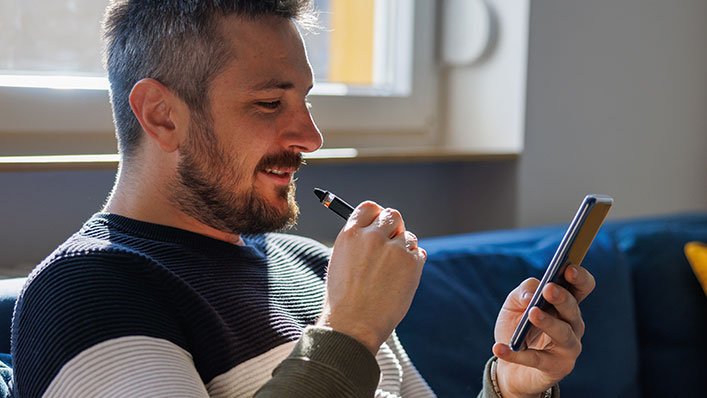
Vaping to quit smoking
Find out more about vaping and how it can help you quit smoking.

Find your local Stop Smoking Service
Almost two-thirds of people who use a vape along with expert support successfully quit smoking.

Benefits of quitting smoking
Quitting smoking benefits your physical health, and boosts your mental health and wellbeing.