Symptoms of dandruff
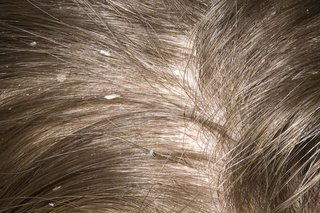
The flakes are often more noticeable in darker hair and if they fall from your scalp onto your shoulders.
Your scalp may also feel dry and itchy.
How to treat dandruff yourself
Use an anti-dandruff shampoo to treat dandruff. There are several different types you can buy from pharmacies or supermarkets.
Look for a shampoo that contains 1, or more, of these ingredients:
- ketoconazole
- coal tar
- salicylic acid
A pharmacist can tell you how to use the shampoo.
Use the shampoo for up to 4 weeks to see if your dandruff gets better. You might need to try more than 1 type to find a shampoo that works for you.
Find a pharmacyWhen and where to get medical help
Dandruff is not usually serious but if symptoms last a long time or become painful, you may need medical help.
Non-urgent advice: See a GP if:
- you still have dandruff symptoms after using anti-dandruff shampoo for at least 4 weeks
- your dandruff is bad or your scalp is very itchy
- your scalp is red or swollen
- you have flaky, itchy patches on your face or other parts of your body
The GP can check your scalp for skin conditions that could be causing your dandruff.
Causes of dandruff
Dandruff is not caused by poor hygiene, although it may be more obvious if you do not wash your hair regularly.
It may be caused by different things, including a type of yeast that naturally lives on your skin, and skin conditions such as eczema.
Stress and cold weather may also make dandruff worse.
| Symptoms | Possible causes |
|---|---|
|
Scaly, itchy and red patches on skin on scalp, face and other areas of the body |
Seborrheic dermatitis |
|
Red or silver rash on scalp, sometimes with patchy hair loss |
|
|
Dry, red, flaky and very itchy skin on areas of the body |
|
|
Red, irritated skin, may also have blisters and cracked skin; reaction to products such as hair dye, sprays, gels or mousses |
|
|
Red, flaky, crusty and sore patches of skin covered with silvery scales |
|
|
Greasy, yellowish crusts on baby's scalp, eyebrows and nappy area |
Do not worry if you're not sure what's causing your dandruff. Follow the advice on this page and see a GP if things do not get better in a month.
Page last reviewed: 27 July 2029
Next review due: 27 July 2029